Street Furniture With a Memory: A Slow Leicester Loop from New Walk to Clarendon Park
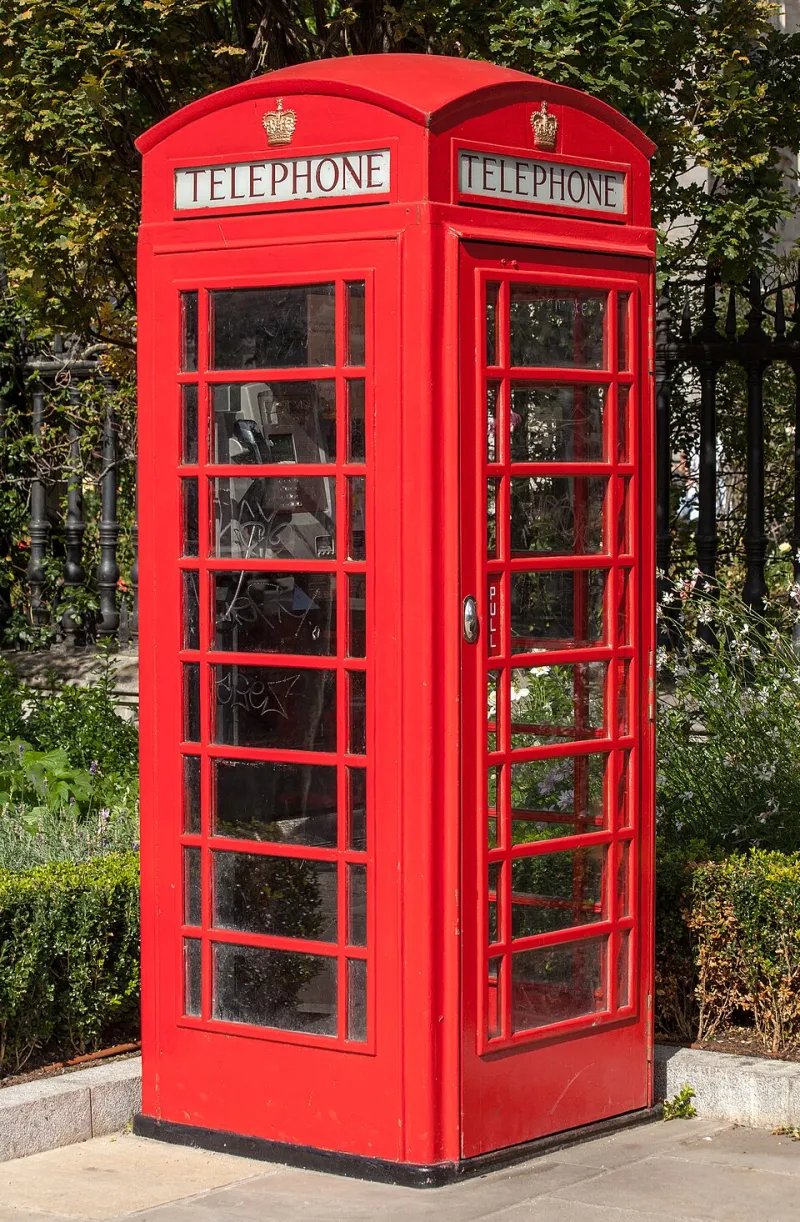
Photo: Christoph Braun, CC0, via Wikimedia Commons
There is a red phone box near the edge of Leicester city centre that has not been used for a call in years. You have probably walked past it. You have probably not looked at it. That is the point of this loop: to spend an afternoon treating the small, ordinary, publicly owned bits of the street as if they were landmarks. Because they are. A post box, a phone box, a faded sign, a bench with a council crest: these are the things a city leaves out for everyone. When they disappear, the pavement gets a little less generous.
This is a Leicester Loops sort of walk: no rush, no checklist, just a route with a bit of looking. It runs about two and a half to three miles, starting at Victoria Park and finishing in Clarendon Park. Mostly flat, mostly pavement, entirely doable in trainers. Give it two hours if you stop for a coffee, ninety minutes if you do not. The idea is not to tick off every red box in Leicester. It is to slow down enough to notice the ones you pass.
Start with the box that no longer rings
Begin at the New Walk gate on Victoria Park, where the avenue of trees pulls you towards the city. New Walk is one of Leicester’s better ideas: a pedestrian route that predates the traffic it now avoids. Walk its length, and keep an eye out for the street furniture that has survived the years. There is a phone box on the edge of the city centre that still has its red paint and its little crown, even if the glass is tired and the receiver is long gone. It is not a museum piece. It is just there, like a stubborn relative.
Phone boxes are odd things to feel fond of. They were never beautiful, exactly. They were practical. But they were also public. Anyone could use one. Anyone could stand inside and shut the door and make a call. That kind of shared infrastructure is easy to take for granted until it is removed. Some boxes around the UK have been turned into book exchanges, defibrillator housings, or tiny art galleries. In Leicester, the ones that remain are mostly reminders. Look at the paintwork. Look at the glass. Look at the way the box sits on the pavement, still claiming a bit of space for everyone.
A post box is a date stamp
From New Walk, carry on into the city centre and loop through the older streets around the Town Hall and the Market. This is where the post boxes start to feel like a trail. Victorian pillar boxes, wall boxes, and lamp boxes are scattered across Leicester, and each one carries a cypher: VR for Victoria, GR for George, ER for Elizabeth. It is a small piece of civic lettering that tells you roughly when the street got its box. You do not need to be a monarchist to enjoy it. It is just a date stamp in cast iron.
The post box is also a useful reminder that public objects do not have to be grand. A pillar box is a red cylinder with a slot. That is it. But it is also a promise: put a letter in here and it will go somewhere. That promise is why people notice when a box is removed or left to rust. The small things are not small if you use them.
Look up, look down, look at the leftovers
The middle stretch of the route is where you should start looking in less obvious places. Look up for ghost signs: faded painted adverts on brickwork, the kind that say 'Hosiery' or 'Garage' in letters that have almost gone. Look down for coal holes, boot scrapers, and pavement lights. Look at the old police call boxes if you find one – Leicester had them, most cities did, and the few that survive are a reminder that public services once had a physical place on the street.
Then there are the faded civic signs. A 'Public Conveniences' plaque. A council crest on a bin. A street name that has been repainted so many times the letters look soft. These are not glamorous. They are evidence. They tell you who was expected to walk here, what was provided for them, and what has been quietly withdrawn. The tone here is not nostalgia. It is curiosity. A city is not just its buildings. It is also the stuff it leaves out for people to use.
The Clarendon Park stretch
From the city centre, head south along London Road and turn into Clarendon Park. The pace changes here. The streets are narrower, the houses are brick, and the post boxes are often set into walls rather than standing on the pavement. Walk a loop around Allandale Road and Queens Road, and you will find the ordinary stuff of a residential neighbourhood: a wall box, a bench, a sign for a school, a faded advert for a shop that no longer exists. This is where the loop earns its keep. It is not a heritage trail. It is a walk through the everyday public realm, with a few red boxes as waymarkers.
Stop for a coffee on Queens Road if you like. Sit on a bench if the weather allows. The point is not to complete the route. The point is to notice what is already there.
Why bother looking?
Because noticing changes the walk. A street you have crossed a hundred times becomes a place with layers. The phone box that no one calls from is still a small public room. The post box is still a slot in the system. The faded sign is still a sentence from the city’s past. None of these things belong to you individually. That is exactly why they matter. They belong to everyone, or they did, and that is worth a look.
So next time you are cutting through town, look up. Look down. Look at the red box on the corner. It is not just street furniture. It is the city, still leaving things out for us.