The Upper Floors Are Still Listening: A Department Store Loop Through Leicester
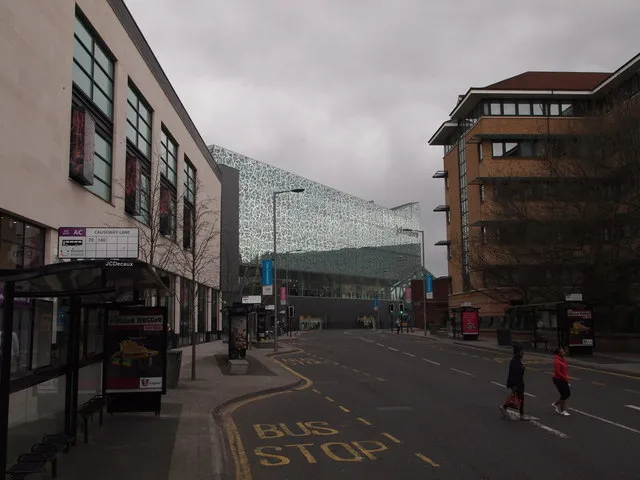
Photo: David Hallam-Jones , CC BY-SA 2.0, via Wikimedia Commons
Leicester is a city that keeps its history at eye level. You can walk from the Clock Tower to the Market and pass a dozen versions of the same story: a grand old shopfront, a modern unit, a boarded upper floor, a fresh coat of paint over something older. This loop is about the department stores that used to anchor those streets — and the smaller family shops that filled the gaps between them.
It is a short walk, maybe a mile and a half if you take your time. No boots required. Start at the Clock Tower, end near Leicester Market, and look up more than you normally would. The ground floors have changed. The upper floors are still listening.
Start at the Clock Tower, look up
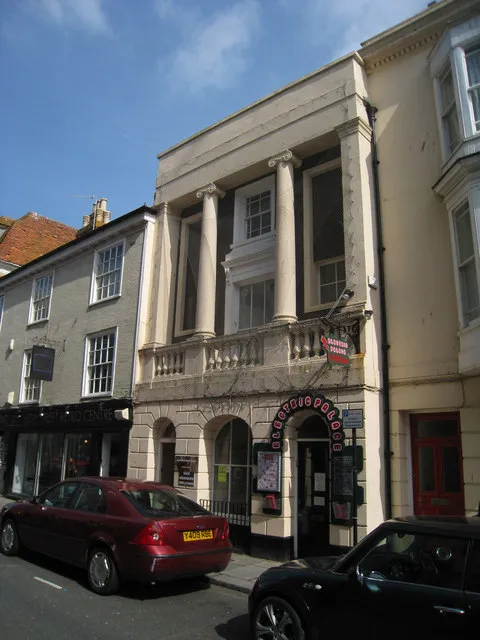
The Clock Tower is a good place to reset your eyes. Most of us walk through this junction looking at phones, buses or the next queue. Try looking at the first and second floors instead. Leicester's retail history is written up there in stone lintels, blocked-in windows, canopy brackets and the occasional ghost sign that only appears in certain light.
Head up Humberstone Gate first. This was never just a route to the Haymarket; it was a shopping street with its own weight. The old Lewis's block is the big ghost on this stretch. Lewis's traded here until the late 1990s, and even if the name has gone, the scale of the building still tells you what it was: a place designed for a long visit, not a quick dash.
Look for the service entrances and the loading bays. Department stores were little cities. They had deliveries, staff entrances, cafés, haberdashery counters and a whole language of departments. Some of that infrastructure is still visible if you stop treating the street as a backdrop.
Humberstone Gate: the Lewis's block
A good department store did something that is easy to miss now: it gave people a weatherproof public room. You could spend an hour inside without buying anything and nobody made you feel like a loiterer. You could meet a friend by the lifts. You could buy one birthday card and come out with a new kettle, a pair of tights and a hot chocolate.
The old Lewis's site no longer reads as one shop. Like many big retail buildings, it has been sliced and re-let, and the pavement outside has changed its rhythm. That is not automatically a tragedy. Smaller units can be more agile. But there is a difference between a building that has been adapted and a building that has been hollowed out. You can usually feel it at street level: fewer doors, fewer reasons to linger, more blank glass.
Walk on towards the Haymarket and then turn back towards the city centre. The point is not to mourn a brand. It is to notice what a big shop did for the street around it. It pulled people past the smaller shops. It made the pavement busy enough for a café to risk a few tables. When the anchor goes, the whole street has to learn to swim differently.
Belvoir Street: Fenwick's long goodbye
Cut through to Belvoir Street. The Fenwick building is the other great set piece on this loop. Fenwick left in 2017, and the building still carries that odd departmental-store silence — too big for a single independent, too specific to be easily reborn as anything else.
Stand opposite and look at the run of the facade rather than the shop signs. Department stores were designed to be read as a whole. They had a horizontal confidence: long window bands, repeated bays, a canopy that told you where to enter. Even when the interiors are stripped out, that confidence remains in the brick and stone.
This is where the gentle opinion creeps in. A city centre's confidence is partly a matter of habit. If people stop walking a street, the street starts to look unsure of itself. If the big windows go dark, the small windows lose their audience. Retail loss is not just about jobs and business rates, important as those are. It is about the ordinary social furniture of a city: the place you sheltered from the rain, the place you queued for a bus with a bag of shopping, the place you met your mum on a Saturday.
The small shops that held the seams
From Belvoir Street, drift towards Cank Street, Silver Street and the lanes around the Market. This is where the family shops come in. Drapers, outfitters, shoe shops, jewellers, fabric shops, cafés with a back room. Some are still there. Some are remembered only by a faded sign or a tiled threshold.
These shops did not have the floor space of a Lewis's or a Fenwick, but they had something else: repetition. They were the daily habit. The department store was the big day out; the family shop was the Tuesday. A city centre needs both. One gives you scale and ceremony. The other gives you recognition — the feeling that a street knows your face.
As you walk, look at the shopfronts rather than the goods. Good shopfronts have a human scale. They have a door you can imagine opening, a window that does not glare back at you, a step that has been worn into a shallow curve. When we talk about reusing grand old buildings, we should also talk about keeping the small ones affordable enough to survive.
What replacement looks like
The obvious answer is that Highcross took the anchor role. That is true, and it is not the whole story. The old department store sites have become flats, gyms, offices, clinics, charity shops, pop-ups and smaller retail units. Some of these are good. A gym on a first floor is a reason to walk down a street in the evening. A clinic is a reason to cross town on a Tuesday morning. A food hall can do what a department store café once did: give people a place to sit without committing to a full meal.
The problem is when replacement happens in fragments and nobody joins the dots. A city centre can end up with plenty of units and no route. You need a reason to walk from one end of a street to the other. You need doors that are open, lights that are on, and a mix that does not feel like a waiting room.
A reuse agenda, not a wake
So what should Leicester do with its grand old shopfronts? The answer is probably less glamorous than a single big rescue plan. It is a hundred small decisions: flexible leases, better upper-floor access, shopfront grants that reward repair over cladding, and a willingness to let buildings be useful before they are perfect. A former department store does not have to become one thing again. It can become a stack of things: studios above, a market hall below, a workshop at the back, a café on the corner.
The trick is to keep the public quality of the building. Department stores were generous in a quiet way. They gave you space to move, shelter from the weather and a place to be among other people without spending money. That is worth designing back in.
The loop back
Finish by walking down Market Street towards Leicester Market. The market is the oldest retail lesson in the city: small units, loud voices, quick turnover, a roof that is not quite a roof. It has survived by being adaptable. The department stores tried to be permanent and mostly were not. The market has been temporary for centuries and is still here.
That is not a reason to give up on grand shopfronts. It is a reason to be smart about them. Leicester does not need a museum of retail nostalgia. It needs buildings that can hold new habits without pretending the old ones never happened. Walk the loop once and you will start seeing the upper floors everywhere: the old stockrooms, the staff staircases, the windows that once looked down on a busier pavement.
They are still there. They are just waiting for the next reason to open.