Where the Lights Went Out: A Saturday Stroll Around Leicester's Missing Picture Houses
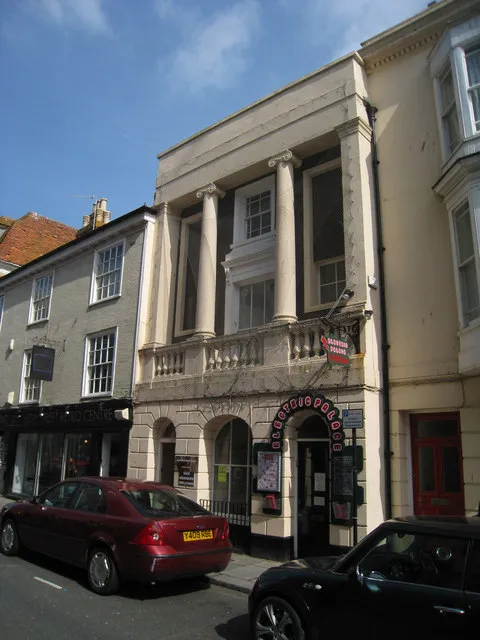
Photo: Oast House Archive, CC BY-SA 2.0, via Wikimedia Commons
There is a particular kind of quiet outside a building that used to be full. You notice it on a Saturday afternoon in Leicester city centre: a doorway that once swallowed queues, a stretch of wall where a name was fixed in letters, a pavement worn by people who arrived early to get a good seat. This walk is about those places. Not to mourn them exactly, but to look again at streets you probably cross without thinking.
The loop is roughly two miles and takes in the centre at an easy pace. Start at the Clock Tower, where the city has always gathered, and keep your eyes at first-floor level. Cinema buildings liked to announce themselves above the shopfronts. Some of that announcement is still there, faintly, like a conversation you have walked into halfway through.
Rutland Street and the big-screen promise
Head up Rutland Street first. The Odeon site is the anchor of this walk — a name that still does a lot of work in local memory. For decades the Odeon was where Leicester went for the big event: the queue that curled around the corner, the smell of popcorn before it became a lifestyle, the moment the lights went down and the room went hush. The building itself has gone, and the street has been reshaped around new uses, but the pavement still carries that old habit of arrival. People used to dress up for this street.
Stand for a minute and consider what a picture palace actually was: not just a screening room but a piece of civic confidence. Leicester had a lot of that in the interwar years. Cinemas were built to look like something, with foyers and staircases and ceilings that told you this was an occasion. The films changed weekly; the architecture was meant to last.
Belgrave Gate and the art of the ghost sign
Cut down towards Belgrave Gate. Here the story is more layered, because the ABC — and the Regal before it — belonged to that class of cinema that sat right in the middle of everyday shopping streets. You did not plan a whole evening around it. You finished work, met someone, and went in. The facade carried the name for years; the building has since been absorbed into the usual churn of retail and redevelopment.
This is where the walk becomes a lesson in looking up. Old adverts and lettering survive in odd places: painted panels, stone names, the ghost of a canopy. They are not always pretty, and they are not always legible, but they are evidence. Leicester's viewing habits did not just change inside the buildings; they changed on the street outside. The cinema was part of the same trip as the market, the bus stop and the chip shop.
Charles Street, Granby Street and the small halls
Loop back through Charles Street and Granby Street, where the smaller halls and converted rooms did the quieter work. These were the places for Saturday morning pictures, for newsreels, for the second-run double bill. They were not grand. They were useful. Local memories of them tend to involve usherettes, ice cream tubs, sticky floors and the specific social code of where you sat.
What replaced them is not a mystery: television, video, multiplexes on the ring road, and eventually the sofa and the streaming menu. But the loss is not only about screens. It is about the walk to the pictures, the queue, the shared laugh, the walk home. A city's evenings are made of those small repeated journeys.
Humberstone Gate and the neighbourhood habit
Carry on towards Humberstone Gate and the Market Place, where the pattern repeats in miniature. Neighbourhood halls came and went; some became shops, some became storage, some were simply swept away. The affectionate word for them is 'flea pit', and it is said with love. They were not palaces. They were rooms where a city watched itself grow up.
This is the clear-eyed part. Not every lost cinema was a masterpiece, and not every replacement is a tragedy. Leicester needed retail space, housing and new ways of moving through the centre. The interesting question is not 'why did they knock it down?' but 'what did we stop doing together?' The answer is usually smaller and more human than we expect.
The survivor, and the walk home
Finish at the Phoenix on Midland Street, the independent cinema that proves the habit never fully died. It is a useful full stop: a reminder that going to the pictures in Leicester is not only a memory. Then find a cafe, take your shoes off your feet for ten minutes, and let the loop settle.
Walk it on a Saturday afternoon, when the city is busy enough to feel like itself. Wear something comfortable. Look above the shopfronts. And if you find yourself standing outside a building that seems to be waiting for a queue that will never come, that is the point of the walk.