Brickwork Billboards: A Slow Loop Through Leicester's Painted Adverts
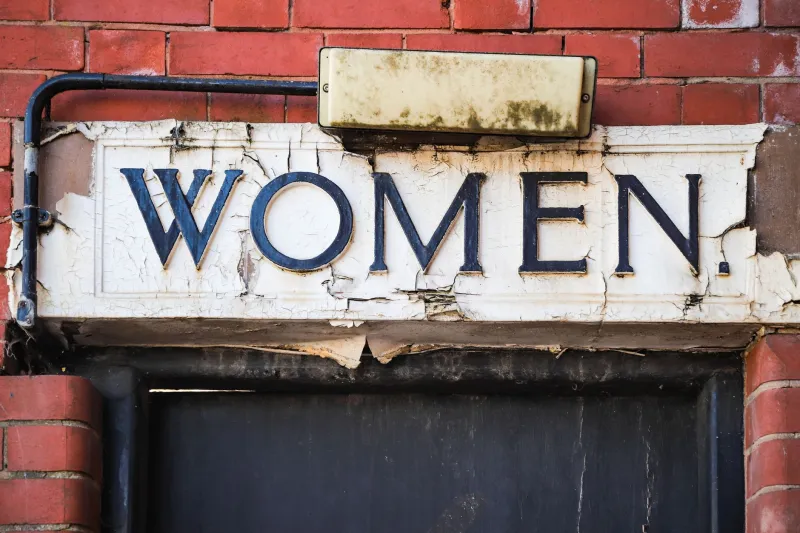
Leicester's ghost signs do not announce themselves. They wait above the bus stop, behind a cable, on the sun-bleached side of a building you have passed a hundred times. A painted grocer's name, a cycle agent's promise, a draper's list of goods: these are adverts from before the age of backlit plastic, when a wall was a billboard and a shopkeeper's reputation was lettered in lead paint.
This loop is a gentle one — roughly a mile and a half if you wander the side streets — and it begins at Belgrave Gate before finishing on the High Street. It is not a treasure hunt with a fixed checklist. Think of it as a way of reading the city's brickwork, one faded layer at a time.
Start where the traffic is loud
Begin at the northern end of Belgrave Gate, near the bus station, and walk south towards the Clock Tower. Keep your eyes at first-floor level and above. Shop fascias change every few years, but the upper walls often keep their older voices.
Belgrave Gate has long been a route into the city, and its buildings show the marks of repeated rebuilding. That makes it a good place to start: the street is busy, everyday and unpretentious, exactly the sort of place where painted adverts were once common. Look for pale rectangles where the brick has been protected from soot and rain, or for lettering that survives only as a shadow against darker masonry. A phone camera zoom is useful. Binoculars are better, if you do not mind the looks.
What counts as a ghost sign?
A ghost sign is simply a painted advert that has outlived the business it promoted. Some are single panels; others are palimpsests, with two or three adverts layered on top of each other as firms changed hands. The best ones are not always the most legible. A few surviving letters can be enough to suggest a trade — Groceries, Cycles, Drapery — and from there you can begin to reconstruct the street as it once worked.
They flourished in the late nineteenth and early twentieth centuries, when commercial painting was cheap and planning rules were looser. A shopkeeper could commission a sign directly onto the brick or render, often covering a whole side elevation. Today we treat walls as surfaces to be cleaned; then, they were surfaces to be used.
The grocer's panel
On Belgrave Gate, watch for the ghost of a grocer's or provisions merchant's sign. Even when the name has gone, the wording often survives: tea, butter, bacon, perhaps family grocer or licensed dealer in tobacco. These were the supermarkets of their day, and their signs promised reliability rather than glamour.
That matters because Belgrave Gate was a shopping street for a dense, working city. Before car parks and out-of-town retail, people bought locally and often daily. A painted grocer's sign is a small record of that rhythm — of credit ledgers, delivery boys and queues that formed before the weekend. It also reminds us that the street's current mix of phone shops, food stores and nail bars is not an interruption of its history. It is the latest version of it.
Cycles, drapers and the trades that built the city
A few doors along, or on a side return, you may catch the remains of a cycle agent's sign. Leicester's engineering and textile trades put wages in pockets, and cycling boomed as both transport and leisure. Cycle agents sold machines, repaired punctures and stocked lamps, bells and oil. Their painted adverts were practical and proud: Cycles and Accessories, Repairs Promptly Executed.
Near the Clock Tower, turn into the High Street and look for traces of drapery. Drapers were the fashion retailers of their day, selling cloth, mantles, millinery and household linen. A faded sign listing Drapery or Mantles tells you that this stretch once catered to shoppers arriving by tram and bus, dressed for a Saturday in town. The lettering may be ornate, but the message was straightforward: come in, we have what you need.
Why the walls keep changing
The names on Leicester's walls are mostly from an older city, but the high street has never been static. Post-war migration from South Asia and East Africa, and later arrivals from many other places, have remade shopfronts, menus and street life. That is not a break with the past so much as the latest coat of paint. Ghost signs are a reminder that commerce has always been layered: one business closes, another opens, and the wall keeps the receipt.
It is tempting to treat old signs as a lost golden age. Resist that. The interesting story is not decline but adaptation. A building that once sold butter may now sell mobile repairs; the brickwork above still remembers the first transaction. Both things are true, and both are Leicester.
How to spot — and protect — them
Start by looking up on any street where the buildings are older than the shopfronts. Check side elevations, corner returns and gable ends, not just the main facade. Early morning or low winter sun can reveal lettering that disappears at midday. Photograph straight on where you can, and note the address and date. Local history groups and civic societies are always glad of well-recorded finds.
Protection is trickier. A ghost sign is not automatically listed just because it is old; listed building status applies to the structure, and conservation areas bring extra planning controls. If a building is in a conservation area, alterations may need consent. The worst thing you can do is attack a sign with a pressure washer or wire brush in the name of tidying up. Repainting is also contentious: a careful restoration can preserve a sign, but an over-confident one can erase the very weathering that makes it authentic. If you own or manage a building with a historic sign, talk to Leicester City Council's conservation officers before doing anything. If you simply admire them, record them, share them and support the groups keeping an eye on them.
Finish on the High Street
End your loop on the High Street, where the pavements are busy and the buildings are tall enough to make you feel small. Look back towards the Clock Tower, then up at the brickwork. The walls are not a museum. They are a working record of a city that has always been in the middle of becoming something else. Leicester Loops likes that about it — and once you start noticing the painted adverts, you will never quite stop.