Skip the Sales Siren: A Saturday Loop of Mending, Rummaging and Reuse in Leicester
There's a particular kind of exhaustion that arrives around the fourth email shouting BLACK FRIDAY at you before you've finished your first coffee. The noise is relentless and oddly frictionless — one tap and something you didn't need is on its way in a van. This loop is the opposite of that. It's slower, it's mostly on foot, and by the end of the day you'll probably have spent less than you would have on a single panicked online basket.
The idea is simple: a Saturday circuit that starts and finishes in Leicester, hits a repair session, a few charity rails, a secondhand bookshop or two and a salvage spot, with proper tea stops in between. You don't need to buy anything. You do need to bring something that's broken — that's the whole point.
Start in Clarendon Park, before the crowds find their feet
Begin on Queens Road, where the charity shops open at a civilised hour and the cafés are already humming. Get there for opening if you can; the good stuff on the rails goes early, and staff are far more willing to chat about what's come in recently when there isn't a queue halfway down the pavement.
A word on rummaging tactics, learned the slow way. Work the rail from the back, not the front — the front is where everything that's been rejected sits. Check the children's section for adult-sized knitwear (it happens more than you'd think). Turn things inside out: a label showing a decent mill or a proper wool blend is worth more than a nice colour. And ask. Volunteers often keep donations out the back for a few days before they hit the shop floor.
If you're after books, the secondhand and charity bookshops around this end of the city will happily absorb an hour. Go in with a vague brief rather than a shopping list. Mine was a 1970s walking guide to the East Midlands, and I've never once regretted the 80p.
The mending bit — and what to actually put in your bag
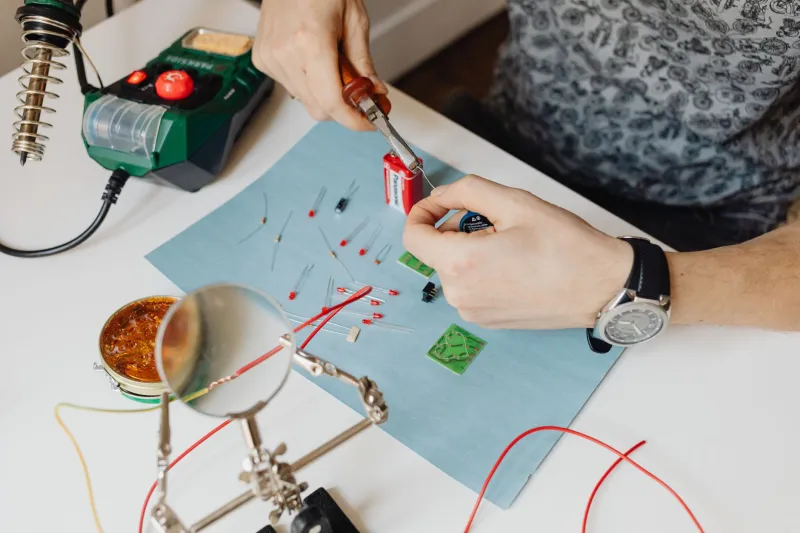
Repair sessions run across the city in community halls, churches and libraries on a rotating basis, usually on Saturdays, staffed by volunteers who between them can rewire a lamp, coax a zip back to life, sharpen a pair of shears and tell you — kindly — that a cheap kettle isn't worth the soldering iron. Dates and venues move around, so check local community noticeboards and listings the week before you go, and book ahead where booking exists. Turn up with a toaster and no appointment and you may be disappointed.
What to bring:
- The thing itself, plus any parts you've already got — a plug, a spare button, the missing screw.
- A note of what's wrong, written down. It's astonishing how quickly a fault becomes indescribable once you're standing at a table with three people looking at you.
- Some cash for parts and a donation. These sessions are volunteer-run and usually free, which is precisely why you should bung a fiver in the tin.
- Patience. There will be a queue. There is always a queue. That's the point.
- Clothing to mend: a jumper with a hole in the elbow, a coat with a dead zip, trousers with a split seam. Textiles are often the quickest win.
- Small electricals: lamps, radios, hairdryers, extension leads. Not microwaves. Never microwaves.
- Bikes and blunt tools if the session advertises them — check first.
Leave the session with a working lamp and a slightly better idea of how it works, and you've already beaten the entire concept of Black Friday.
Across town: salvage, makers and the long middle stretch
From the city centre, head out towards the West End and Narborough Road — one of the most interesting stretches of independent shopfronts in the Midlands, and a good place to remember that "new" isn't a synonym for "good". Fabric shops, hardware shops, grocers, tailors and repairers of various stripes sit side by side, and the competition keeps prices honest.
For salvage and architectural bits and pieces — a door handle, a length of timber, a picture frame, a chair that needs one small repair — the yards and reclaim places on the edge of the city are worth a rummage, though opening hours vary wildly and stock is gloriously unpredictable. Phone before you trek out. Take measurements. Take a photo of the thing you're trying to match.
Independent makers are the other half of this. A locally thrown mug that lasts fifteen years is a better deal than three novelty ones from a warehouse, and you get to meet the person who made it. That's not a guilt trip, it's just arithmetic with better company.
Tea, and the walk home
Budget two proper stops. One mid-morning, one mid-afternoon, and don't be shy about choosing the café with the mismatched chairs over the one with the laminated menu. Leicester does this well — there's chai on Belgrave Road, good coffee in the city centre and Stoneygate, and a decent cup almost anywhere you'd want to sit down.
Allow four to five miles of walking in total, and give yourself the whole day. Bring a tote bag, a rucksack, a fiver in coins and a charged phone. Take the bus back if your knees have had enough; nobody's marking you on it.
The friendly argument
Here's the thing about late November. The sales aren't really about stuff — they're about momentum. Once you're in the slipstream it's genuinely hard to get out, and the result is usually a cupboard full of things you can't remember choosing.
A day spent mending a lamp, finding a coat that fits properly and buying a book someone else has already loved does something subtler. It keeps money in the neighbourhood, it keeps a bit of stuff out of landfill, and it reminds you that most of what you own can be kept going with a little attention. Not everything, obviously. But more than you'd think.
Go on a Saturday, take something broken, and see what comes back fixed.