Stop Whispering: Leicester Has Never Been a Hidden Gem
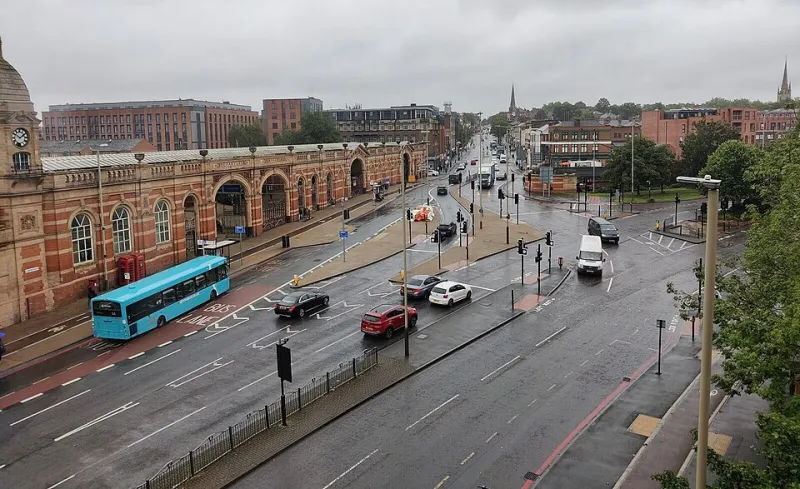
Photo: Mat Fascione , CC BY-SA 2.0, via Wikimedia Commons
There's a sentence we say in Leicester, and we say it almost apologetically, usually while recommending somewhere brilliant. It's not much, but… Or: you wouldn't think it, but… Or the one that gets trotted out every single time a national paper sends somebody up the M1 for a feature: Leicester's a bit of a hidden gem, actually.
It isn't. It hasn't been for years. And the fact that we keep saying it is now the most interesting problem the city has.
What 'hidden gem' actually means
A hidden gem is small, tucked away and findable only by insiders. It's a phrase used by people who've just discovered something and would quite like credit for the discovering. Apply it to a place with 370,000 people, a Premier League trophy in the cabinet and the largest Diwali celebration outside India and it stops being modest. It starts being a bit of a lie.
Nobody in Nottingham describes Nottingham as a hidden gem. Nobody in Birmingham does it either, and Birmingham has spent thirty years being the national punchline. We're the only city we know that pre-emptively joins in with the joke before anyone's made it.
The proof, in one short loop
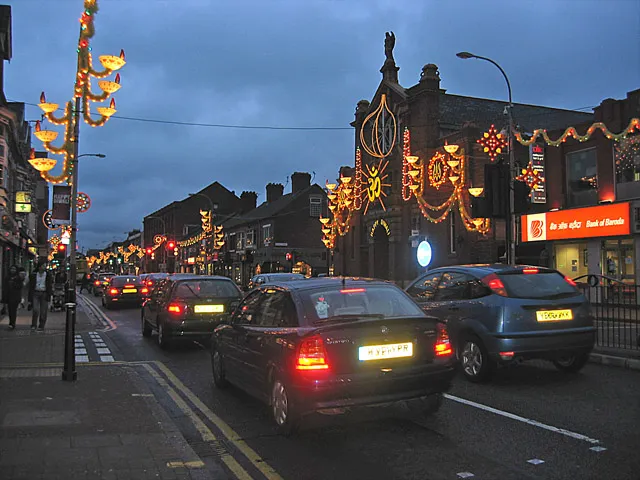
If you wanted to make the case to a stranger in a single evening, you could. Start on Belgrave Road in November, when the Diwali lights are up and the whole Golden Mile smells of frying onions and cardamom and roughly forty thousand people are out walking it. That's not a local secret. Coach parties come. People fly in.
Then walk into town. You'll pass a cathedral with a king in it — Richard III, dug out of a car park in 2012 and reburied in 2015, a story that made news on every continent. Carry on to the Jewry Wall, one of the biggest surviving chunks of Roman masonry in Britain, sitting quietly next to a leisure centre as though it's nothing.
In February, that same city centre hosts the Leicester Comedy Festival, running since 1994 and comfortably bigger than anything comparable in Europe. In the summer, the King Power fills with people who still can't quite believe 2016 happened. The music list is longer than most people realise: Kasabian, Showaddywaddy, Englebert Humperdinck, and a club scene that shaped more of the 1990s than it gets credit for. There's a National Space Centre. There's a covered market that has been trading for around seven hundred years. There's Leicester Tigers, the most successful club in English rugby.
None of that is hidden. It's just badly told — often by us.
Where the habit comes from
None of this is a mystery. Leicester spent the twentieth century as a boom town and then a bust one, and bust towns learn to keep their heads down. We sit between two louder neighbours and we've spent decades being the place you pass through on the train. When the national press has bothered to look, it's usually been to write about tension rather than texture.
And then there's 2016. Even our single greatest moment got framed, in most of the coverage, as a fairytale — an accident, a fluke, little Leicester. We won the league by ten points and the story was still about how unlikely we were. When you're told for long enough that your successes are anomalies, you start apologising for them.
What it costs us
Here's the bit that matters. Calling yourself a hidden gem is not harmless modesty; it's a self-fulfilling prophecy with a price tag.
It costs us visitors who book Birmingham for the weekend because nobody told them there was anything here. It costs us graduates who assume the interesting jobs are in Manchester or Bristol. It costs local businesses, who under-invest in marketing because deep down they're not sure the city deserves it. And it costs us the argument we should be making to government and to investors, because you cannot demand infrastructure for a place you've spent years describing as a well-kept secret.
Being honest about the flaws
This isn't a claim that the city is perfect. The bus station is grim, the retail vacancy rate on some streets is genuinely worrying, and the future of the market is a live argument rather than a settled one. Transport across the county is patchier than it should be and the city has been let down by national funding decisions for years.
But pointing out the roof needs fixing is not the same as telling everyone the house is rubbish. There's a difference between criticism and the reflexive, throat-clearing apology we do at parties, and we've been doing the second one for far too long.
What to do about it, starting this week
If you live here: drop the disclaimer. Next time someone asks where you're from and pulls a face, don't shrug. Say: just over an hour from St Pancras, biggest Diwali outside India, come for a weekend and I'll show you the good bits. Then actually invite them. A friend's text message is worth more than any tourism campaign this city has ever funded.
If you run a business here: put Leicester in your copy. Not the East Midlands, not 'the Midlands' — Leicester. Use real photographs of real streets rather than stock images of generic red brick. And open on the evenings people actually arrive, because a city that shuts at five can't complain about being overlooked.
If you're a venue, a festival or a market stall: tell the story properly, with dates and names and numbers, rather than hoping somebody else does it for you. The city's best marketing has always been done by people who were too busy to be modest.
The last word
Hidden gems get found and then forgotten — that's what happens to them. They're a nice thing to say about a village with a good pub.
Cities don't need to be discovered. They need to be known. We've already done the hard part: the food, the football, the festivals, the history, the eleven languages you'll hear on a single bus. All that's left is the bit we keep refusing to do — saying it out loud, without flinching, and without the word 'actually' at the end of the sentence.